Steelhead Fishing Buffalo NY: 8 Best Steelhead Spots
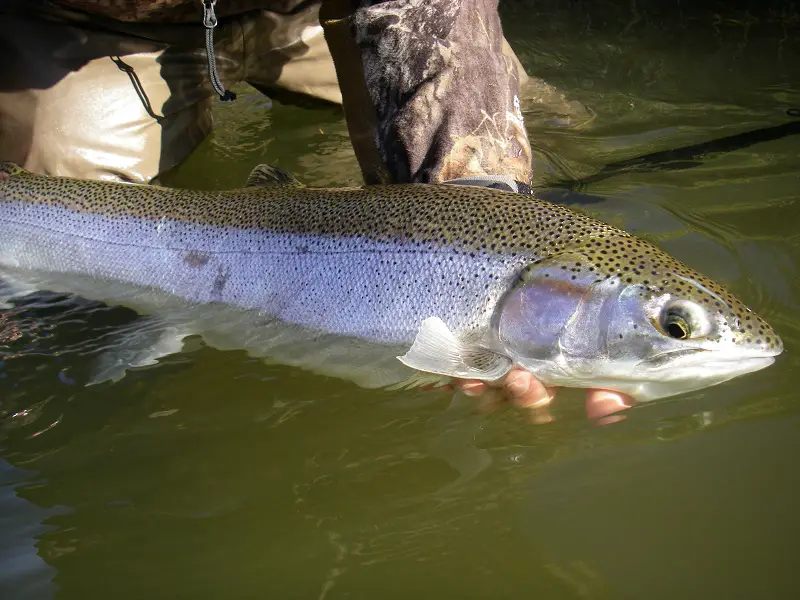
You probably would not think of Buffalo, NY when you picture a steelhead trip, but Buffalo sits right in the heart of what anglers call Steelhead Alley – the southern Lake Erie and Niagara River corridor that draws steelheaders from all over the Northeast every fall through spring. A couple of the eight spots I cover below are arguably the best steelhead water in New York, and maybe the whole Great Lakes.
I am lucky enough to live close enough to drive to all of these rivers, and I have fished them for over 20 years. With the right stream and the right timing, world-class steelhead fishing is within an hour of downtown Buffalo.
About Steelhead Fishing Buffalo And Area

Lake Erie is full of steelhead thanks to excellent stocking, and the population is further supplemented by natural reproduction in the New York tributaries – most notably Cattaraugus Creek and its feeders. Not far north of Buffalo is Lake Ontario and its own steelhead streams, so there is water in every direction.
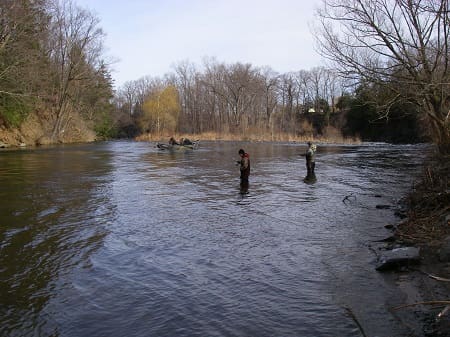
I fish the many great nearby Western New York steelhead rivers. Streams like Buffalo Creek, 18 Mile Creek, and Cattaraugus Creek are all good options, and the Niagara River might be the best steelhead river in the Great Lakes.
Best Season For Buffalo-Area Steelhead
Mature steelhead can enter the tributaries as early as mid-September, but the bulk of the run is from mid-October through April. These streams offer high-quality lake-run steelhead fishing right through November to April. The Lower Niagara is the exception that fishes all winter because it does not freeze – the creeks fish best after rains bring fresh water and pull new fish in, then drop and clear.
1. Lower Niagara River
Distance from Buffalo: about 20 to 30 minutes north. Access: Devil’s Hole State Park, Whirlpool State Park, Artpark, the NYPA fishing platform, and the Lewiston Sand Docks.
The 14 miles of the Lower Niagara below the falls is likely the best steelhead water Western New York has to offer – powerful current, deep water, and huge migratory pushes of fish. For shoreline fishing, look for the slower water such as the area above Lewiston; the deeper water above and below Lewiston is best fished from a boat. The main shore access points are:
- Whirlpool State Park
- Devil’s Hole State Park
- Lewiston Sand Docks
- Fort Niagara State Park
Small runs enter with the salmon as early as September, and it gets much better from November into December. It also fishes well on warmer days in January and February because the steelhead stay in the river all winter, and spring produces some of the biggest fish of the year – Niagara steelhead can top 20 pounds. This is a big, powerful, world-class fishery, so I gave it its own full guide: Niagara River steelhead fishing.
NOTE: whether you fish the upper or lower river from the U.S. or Canadian side, you may need both countries’ licenses if you cross the middle of the river.
2. Upper Niagara River And Buffalo Harbor
Distance from Buffalo: in the city to about 5 to 10 minutes. Access: shore fishing along Buffalo Harbor and the upper river.
In the upper section, anglers catch steelhead and lake-run browns, though fewer people target them here than on the lower river. Buffalo Harbor and the head of the upper Niagara also see some trout activity – you can catch steelhead in the harbours from October through April when they are not frozen, with March and April the most productive. It is a good option if you want to stay in the city in late winter and early spring.
Canadian shoreline: anglers back-drift Flatfish along the Canadian shoreline from the Peace Bridge to Thompson’s Hole and catch plenty of rainbows and steelhead. Fort Erie to the International Bridge: a mix of lakers, browns, rainbows, and walleye. Thompson’s Hole: anchoring with minnows, spawn sacs, or casting crankbaits can be very good. Ferry and Peace Bridge: anglers take steelhead off the wall from the headwaters down to the foot of the Ferry, with the Peace Bridge hole a standout on spawn sacs.
Methods: back-trolling Kwikfish, spawn sacs or skein and swimbaits on a three-way rig, or drifting bucktail jigs tipped with minnows in fall and spring. In spring and fall, Rapalas and other crankbaits trolled or back-trolled along the Canadian wall also take rainbows and walleye.
Pro Tip: one of the best ways to learn these rivers and the tactics that work is to hire a local guide. For this area, consider Andrew Full at Full Fishing Guide Service.
3. Cattaraugus Creek (The Catt)

Distance from Buffalo: about 45 to 60 minutes south. Access: Gowanda up to the Springville Dam, Zoar Valley, plus the boat and bank access points below.
Cattaraugus Creek is the most popular Lake Erie tributary among steelhead anglers, thanks to the quality of its runs and the amount of public access. Locals call it the “Catt,” and reports of anglers catching over 30 steelhead a day are common at peak times in late fall. Do not let the word creek fool you – this is a good-sized river, 40 to 50 feet wide up to the Springville Dam. The steelhead section runs from Lake Erie to the Springville Dam, giving you around 34 miles of water.
Spring can be very good once the water drops and clears, but the Catt gets dirty easily and can stay off-colour for much of the spring. If you show up and it is blown out, you can fish nearby Walnut Creek, Silver Creek, or 18 Mile Creek instead.
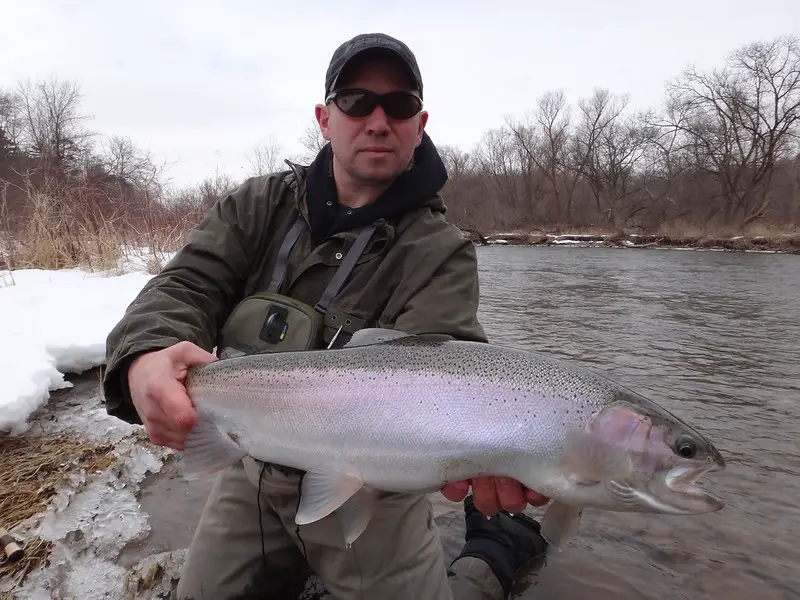
The Catt is a dynamic river with wide sections, slow water, fast water, and some very scenic cliffs and forest. Near the lake you will find slower water that is good for float fishing and casting lures. As you move up from Lake Erie it speeds up over a rocky bottom, which makes for excellent fishing on most methods – the upper section is a favourite of fly anglers and guides. You will also find small tributaries along it, including Clear Creek, Coon Brook, and Spooner Brook. Handy access points are Scobby Hill Dam, the Hanover launch ramp, and Morton’s Corner Road.
Important: roughly 13.5 miles of the lower Cattaraugus run through the Seneca Nation Reservation and require a special fishing permit for that section. Confirm current Seneca Nation permit requirements before you fish there.
4. Eighteen Mile Creek (Erie County)

Distance from Buffalo: about 20 to 30 minutes south. Access: Eighteen Mile Creek County Park (over two miles of stream) and South Creek Road in Hamburg.
Eighteen Mile Creek flowing into Lake Erie is a well-known steelhead stream, with lucrative runs in fall starting in late September and peaking in November – though weather, rain, and temperature can push that later. Spring runs start in early March or just after ice-out and fish well into early May. This is one of the larger streams in this part of the state and the second-largest Lake Erie tributary in New York, with over 15 miles of water. Just before the creek crosses South Creek Road in Hamburg there is a waterfall that steelhead cannot pass, which makes it easy to narrow down where to fish.
Do not confuse this with the Eighteen Mile Creek that flows into Lake Ontario near Olcott – that is a different stream. For the full breakdown, see my guide to Eighteen Mile Creek steelhead fishing.
5. Cayuga Creek
Distance from Buffalo: about 15 to 20 minutes east. Access: J.C. Stiglmeier Park and Como Lake County Park.
Cayuga Creek is a major tributary of the Buffalo River – it joins Buffalo Creek to form the river that runs through the city. It gets relatively reliable steelhead runs every year, and fish can migrate from the mouth up to the Como Park Lake Dam. Public access is very limited, so stick to the confirmed public spots at J.C. Stiglmeier Park and Como Lake County Park.
6. Buffalo River And Buffalo Creek
Distance from Buffalo: in the city. Access: Harlem Road fishing access and boat launch; the West Seneca Buffalo Creek fishing and hiking area below Blossom Dam.
The Buffalo River is right at the city limits and gets decent steelhead runs in the main river and its tributaries. It was once too polluted to bother with, but it has been cleaned up and now gets small annual runs, particularly in late fall and mid-spring. The most popular place to shore fish is the Harlem Road fishing access and boat launch, a well-known steelhead spot – and just upstream where Buffalo Creek comes in, two streams meeting means better-than-average fishing. Other access points include Bailey Avenue Peninsula, Red Jacket Riverfront Park, and Seneca Bluffs Natural Habitat Park.
Buffalo Creek itself gets good runs but has very limited or no public access, and steelhead can run up to the Blossom Dam. Remember that a fishing license is not permission to trespass – you need landowner permission on private sections.
7. Cazenovia Creek
Distance from Buffalo: about 15 to 20 minutes southeast. Access: the Cazenovia Creek Fish & Wildlife Management Area in West Seneca, and Cazenovia Park.
Cazenovia Creek is a Buffalo River tributary that gets good runs of steelhead, best from fall through spring when the migratory fish push in from Lake Erie. On the East Branch they are blocked by the dam near Center Street in East Aurora, and on the West Branch by West Falls. Access is limited by private property, but the Cazenovia Creek Fish & Wildlife Management Area and Cazenovia Park give you public water. This is more of a local option than a destination fishery – a good pick for Buffalo-area anglers who just want nearby water.
8. Chautauqua Creek

Distance from Buffalo: about an hour southwest. Access: the Westfield Waterworks Dam passage and public-fishing sections.
Chautauqua Creek is another well-known steelhead stream in the region, with a solid 15 miles of water – though only about 8.5 miles have public fishing rights, so get landowner permission before fishing private land. The best access is through the Westfield Waterworks Dam passage.
More nearby water: with more than a dozen tributaries within an hour of Buffalo, there is almost always a productive option based on the flows and water colour. A few others with their own guides on this site are 16 Mile Creek, Canadaway Creek, and Crooked Creek.
The Best Methods For Steelhead Fishing Around Buffalo
There are a lot of good methods for these waters. Match the method to the stream and the conditions and you will hook more fish.
Fly Fishing
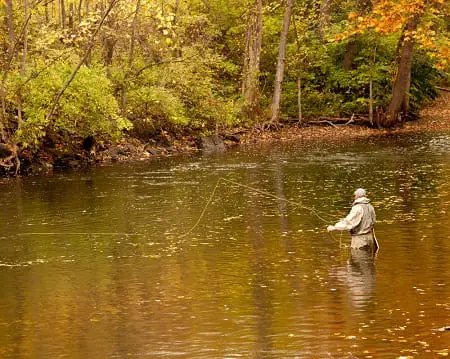
Fly fishing is very effective here – the rivers suit nymphing and streamer fishing, and these steelhead readily eat a well-presented fly. Be sure you know how to fly fish for steelhead and carry my most productive steelhead flies.
Spey Fishing
Spey fishing is great on the larger rivers, especially where you are short on backcast room. The Cattaraugus is one of the best around here for Spey fishing.
Streamer Fishing
Streamer fishing works on all the streams around Buffalo, including the upper and lower Niagara.
Float Fishing
Float fishing is likely the most effective method overall on most of these streams. Drifting the pools and deeper runs with bait or flies under a float is standard practice and produces a lot of steelhead. A slip float on the Niagara is a great way to cover water.
Drift Fishing
Drift fishing suits the bigger rivers with heavy current like the Niagara. Here it means drifting bait down the river without a float, keeping it in the strike zone. See more on my page, drift fishing for steelhead.
Plunking
Plunking is a popular still-fishing method on the Niagara and the lower sections of most streams, and it is also good at the river mouths and along the Lake Erie shoreline.
Lure Fishing
Lure fishing is good on any of these rivers and at the mouths and shorelines of Lake Erie. Spoons, spinners, and crankbaits produce the most fish – the key is fishing them properly. Jigs and plugs work too, as I cover on my page, lure fishing for steelhead.
Best Baits
As on most Great Lakes tributaries, the reliable baits are:
- Salmon and trout eggs: tied into spawn sacs, great for float fishing and plunking.
- Beads: a salmon-egg imitation that is very popular for steelhead – see bead fishing for steelhead.
- Artificial flies: also fished well under a float, and a very good option.
- Minnows: with all the baitfish in the Niagara, live or dead minnows are often deadly.
Rules And Regulations To Know
Any stream that empties into Lake Erie has the potential for a steelhead run, but the rules matter. This is a summary only – always verify the current rules on the NYSDEC website before you go, because they vary by stream and by section.
- Landowner permission: your fishing license is not a permit to trespass. On sections without public fishing rights you must get the landowner’s permission. Respect their property or you risk losing access for everyone.
- Size and limits: for most Lake Erie tributaries the standard regulation is a 12-inch minimum size and a daily limit of 3 fish. Always confirm the current rules for the specific stream section.
- Hours: fishing is generally permitted from one half-hour before sunrise to one half-hour after sunset.
- Seneca Nation water: the lower Cattaraugus section on the Seneca Nation Reservation requires a separate permit.
Check the current New York State DEC fishing regulations for the area before heading out. For more on the best methods and baits, see Steelhead Fishing NY.
Buffalo Steelhead Fishing FAQ
What are the best steelhead spots near Buffalo?
The Lower Niagara River is the standout, and Cattaraugus Creek is the most popular tributary. Eighteen Mile Creek, Cayuga Creek, the Buffalo River, Cazenovia Creek, Chautauqua Creek, and the upper Niagara and Buffalo Harbor round out eight strong options, all within about an hour of the city.
When is the best time to fish steelhead near Buffalo?
Fish enter as early as mid-September, but the bulk of the run is from mid-October through April, with November to April the prime window. The creeks fish best after a rain freshens and drops. The Lower Niagara fishes all winter because it does not freeze.
Do you need a special permit to fish Cattaraugus Creek?
For the roughly 13.5 miles of the lower Cattaraugus that run through the Seneca Nation Reservation, yes – you need a separate Seneca Nation fishing permit. The rest of the creek is fished on a standard New York license, but always confirm current rules.
What are the steelhead regulations for Buffalo-area creeks?
For most Lake Erie tributaries the standard is a 12-inch minimum size, a daily limit of 3 fish, and fishing from a half-hour before sunrise to a half-hour after sunset. You also need landowner permission on private sections. Rules vary by stream, so verify with NYSDEC before you fish.
Tight Lines,
Graham



Graham, great reads. I have a few questions about float trips. Could you email me? Thanks
Brian