Kalamazoo River Steelhead Fishing And Salmon Fishing
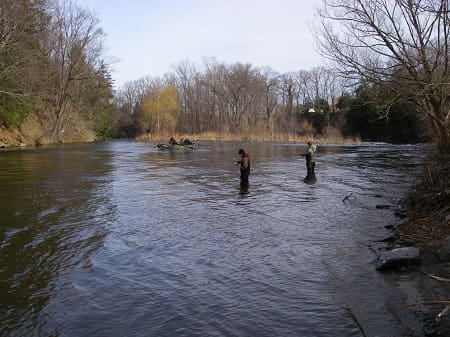
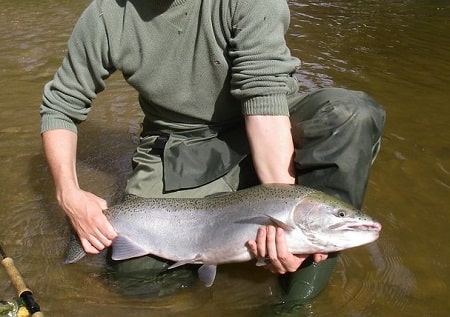
Kalamazoo River steelhead fishing can be excellent, but it also has its challenges. I have fished the Kalamazoo for 15 years, and my favourite way to fish it is on foot below the Allegan Dam – the wading can be tough, so a long-handled net is a big help when it comes time to land a big steelhead.
The river also has good salmon fishing starting in late August and peaking in October, and in the fall the steelhead and salmon share the river, which makes for some exciting days. The Allegan Dam is the upstream limit for both, so the fishery below it is where you want to be.
About The Kalamazoo River
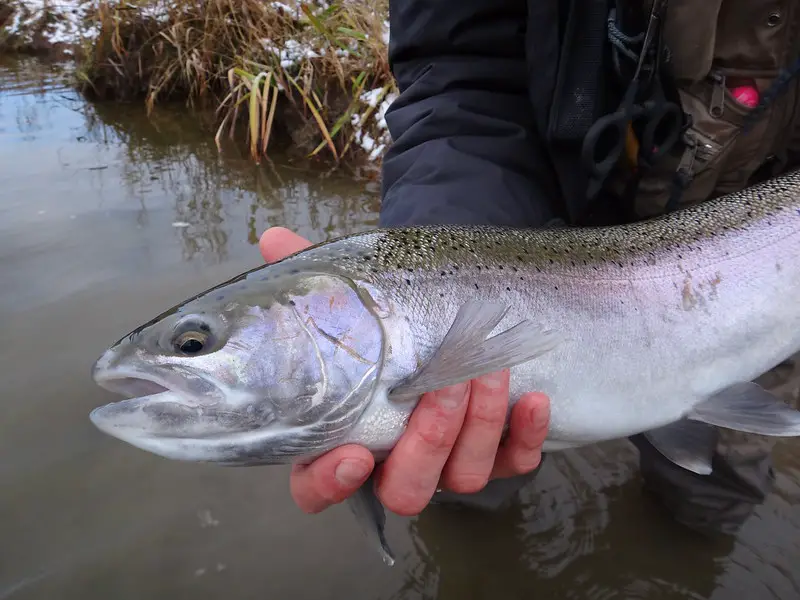
The Kalamazoo River is in southwest Michigan. It rises in Hillsdale County as a spring-fed pond, gathers its North and South branches, and flows west-northwest for about 175 miles before emptying into Lake Michigan near Saugatuck. It once powered grist mills and hydroelectric dams; today it is a popular fishery for bass, coho salmon, Chinook salmon, walleye, catfish, and the famous Kalamazoo River steelhead, with some tributaries adding rainbow, brown, and brook trout.
About The Kalamazoo River Steelhead
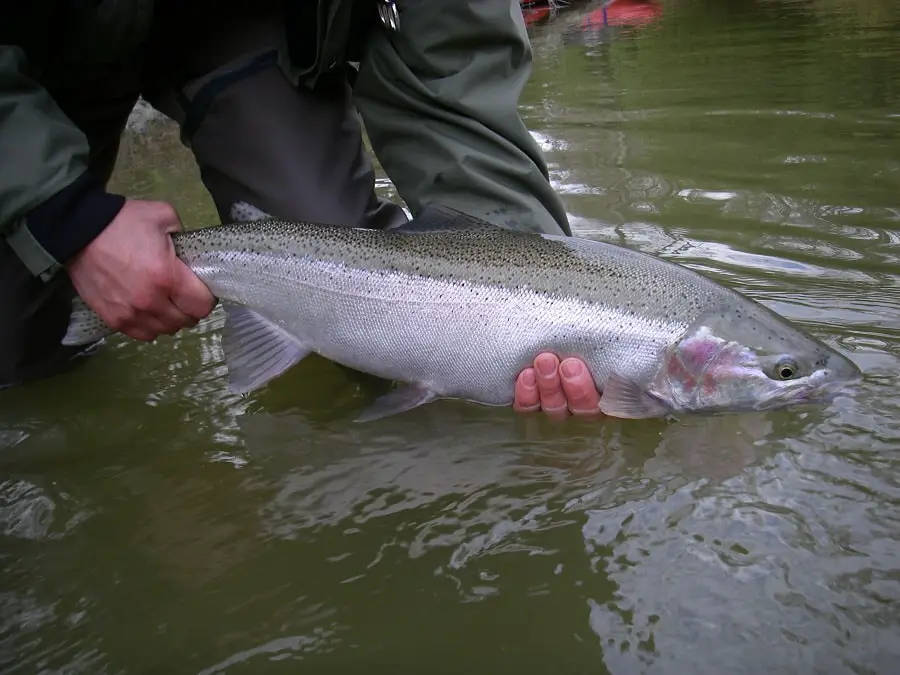
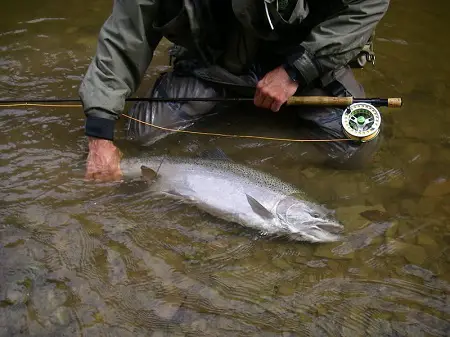
The Kalamazoo is one of the best steelhead waters in southwest Michigan. It is stocked each spring with about 15,000 Michigan-strain steelhead, and summer-run steelhead also wander in from Lake Michigan, most of them likely straying from the nearby St. Joseph River. Steelhead are migratory rainbow trout – born in the river but living most of their lives in the Great Lakes. Most spawn in March or April, though fish start entering as early as September and keep coming through the winter. Anglers here describe them as fierce, muscular, and aggressive, and they are a real challenge in big water that is often littered with wood and logs.
The Best Access Points On The Kalamazoo River
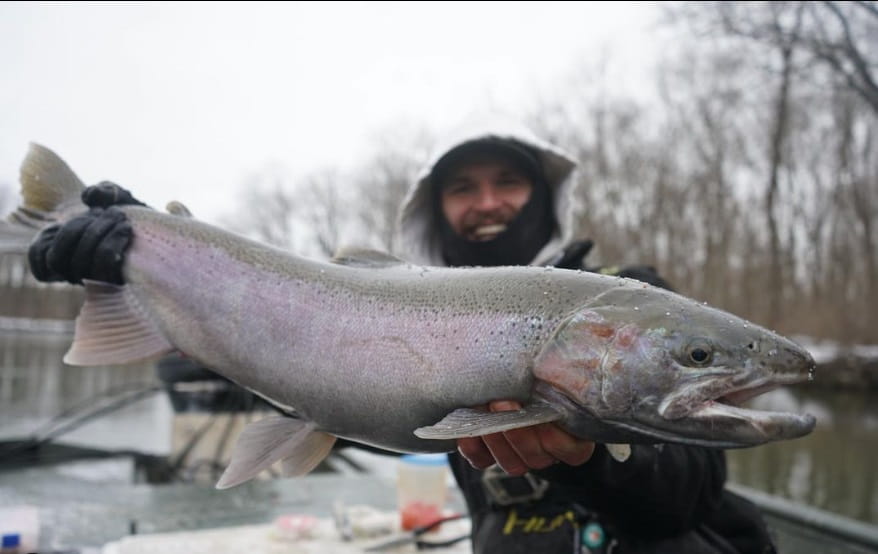
- Below the Allegan Dam: the Allegan Dam launch is a good place to put a boat in and fish the 4 to 5 miles below the dam – the prime steelhead water. During cold spells, fish run up and stack near the dam to wait out the cold, and because this stretch usually stays ice-free it gives dependable winter fishing. There is bank access at the dam, but wading is tough, so many anglers fish from a boat. Watch the current in the first half mile below the dam; it slows a lot after that.
- M-89 access and boat launch: where M-89 crosses the river about four miles below the Allegan Dam, with a parking lot and boat launch. Bank angling is possible but tough through the forest and deep banks.
- Rabbit River junction: the confluence with the Rabbit River, roughly halfway between the Allegan Dam and Lake Michigan, is a spot a lot of anglers like when the river is in shape.
- New Richmond Bridge Park: farther downriver, with a boat launch and parking – best fished by boat.
- Lower river toward Saugatuck: do not overlook the lower river close to Lake Michigan. On fresh runs, chrome fish are caught surprisingly close to the lake, and you can intercept them before they get pressured.
Kalamazoo River Tributaries
Three small tributaries – Mann, Bear, and Sand Creeks – flow into the lower Kalamazoo and are classified as high-quality cold-water streams. They serve as spawning grounds for steelhead and salmon and hold brook and brown trout. The mouths are worth fishing, because steelhead stack up there before pushing into the tributary, and they can be a hotspot on an otherwise big, intimidating river. Bear Creek, inside the Allegan State Game Area, gets the most attention thanks to easy access and a brown trout stocking program; Sand and Mann Creeks see lighter pressure.
Is The Kalamazoo River Wadable?
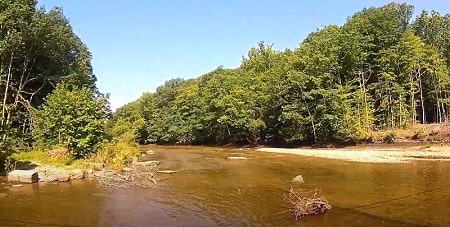
It is wadable in places, but mostly upstream of M-89 rather than right below the dam. Even there it is only really wadable on the inside of the bends, because the outside bends are often ten feet deep right off the bank. Wading much of the river can be treacherous with that deep water at the banks, and the hardest part is landing a big steelhead along tree-lined, deep-cut banks. That is exactly why I carry a long-handled net here – so I can land a fish without having to get into the water. For bank fishing, find any open area free of logs and wood, and a lot of bank anglers set up below the bridges and target steelhead moving through.
The Best Time For Kalamazoo Steelhead
Because there are some Skamania summer-run steelhead in the system, there is a chance at a steelhead almost any month, but most fish are in the river from October into late April.
- Late August to October: the salmon run builds and peaks, and the first steelhead slip in behind them to feed on eggs.
- Late October to December: prime fall steelhead. It is on fire through November and into early December.
- Winter: fish settle in and congregate near the Allegan Dam, which does not always freeze, while the lower sections ice up. Midday is often the best bite in the cold.
- March to early May: the spring run arrives in numbers – the best steelhead fishing of the year, with multiple-fish days when the water temperature and clarity are right.
Reading The Water: Where Steelhead Hold And Move
This is the part that took me years to really learn on the Kalamazoo, and it is where most people go wrong. The single biggest mistake I see – and local anglers say the same thing – is that newcomers over-fish the deepest water. When steelhead are on the move, current seams catch far more fish than the deep holes. The deep holes are really only worth your time on the coldest days of winter.
When fish are moving, I spend most of my time on the travel lanes they slide through:
- Current seams
- Walking-speed current
- Tailouts (best in winter)
- Inside bends
- Bucket water below riffles
There is also a decision to make based on what the fish are doing. If they are holding because of cold water and are not feeding in one spot, keep moving to find active fish. But if fish are on the move, it can pay to stay put in a good spot and wait for fresh fish to come through. Early in the season, in October and early November, do not walk through the shallows to reach the deep pools – fresh fish often hold in 2 to 4 feet over gravel runs and transition water, and people wade right through them.
Leaders And Gear For Big-Water Steelhead
Because chasing a big steelhead down these tree-lined banks is so tough, I use the maximum leader I can get away with. A strong fluorocarbon leader of about 0.22 mm is good in clear water, and I step up to 0.24 mm in dirtier water. Pair that with the long-handled net I mentioned and you are set up to actually land the fish you hook here.
Local Guide Tactics: Fish Conditions, Not The Calendar
The Kalamazoo is under-publicized compared with the St. Joseph, Muskegon, or Pere Marquette, so there are fewer river-specific guides putting out detailed tactics. But comparing what the local guides and experienced anglers do consistently say, the same themes come up again and again – and they line up with how I fish it.
The number-one secret is to fish conditions, not the calendar. Fish right after a fresh rain, once the heavy mud starts to clear – the first 24 to 72 hours of dropping water is usually the best window, and steelhead keep moving well after dark on rising water. Beyond that, the recurring local advice is:
- Cover water aggressively. Fish a run thoroughly, move 100 to 300 yards, and repeat. Treat the river as a migration corridor, not a sit-and-wait pond.
- Fish the first soft water below fast current – the cushion of walking-speed water 3 to 6 feet deep just below a riffle, where fresh fish stop before continuing up.
- Presentation beats lure choice. Whether you fish spawn, beads, jigs, worms, or flies, a natural drift matters more than colour. Good anglers adjust weight far more often than they change bait.
- Keep your drifts short. Shorter drifts with frequent recasts and good float control out-fish one long 100-foot drift.
- Fish the inside edge as water drops. As the river falls, fish slide to inside bends and softer current while many anglers keep pounding the heavy center flow.
- Do not overlook cloudy days. Overcast, misty, or lightly raining conditions keep fresh fish active longer than bright sun.
- Match the food to the season. Eggs are king while salmon are spawning; once the carcasses are gone, lean more on worms, baitfish patterns, streamers, and jigs.
- Fish every depression. The Kalamazoo lacks the dramatic pools of northern Michigan rivers, so a spot just a foot deeper with slightly slower current will hold fish – do not pass them by.
The tactics that showed up most consistently across local sources, ranked by how often they came up:
| Tactic | How often mentioned |
|---|---|
| Fish dropping water after rain | 5/5 |
| Cover lots of water | 5/5 |
| Natural presentation over bait choice | 5/5 |
| Fish current seams, not only deep pools | 5/5 |
| Stay closer to Lake Michigan on fresh runs | 4/5 |
| Target soft water below riffles | 4/5 |
| Fish shallow early-season holding water | 4/5 |
| Fish the inside seams as water drops | 4/5 |
| Midday is often best in winter | 4/5 |
| Plug fishing / back-trolling from boats | 3/5 |
The Best Methods For Kalamazoo Steelhead
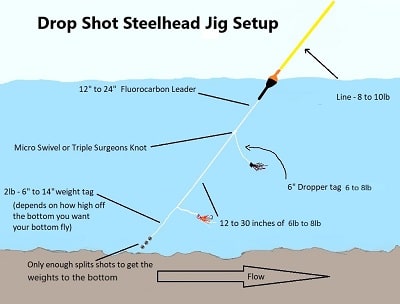
- Float and centerpin fishing: drifting bait under a float or on a centerpin is the most effective method on many stretches. Find water 6 to 12 feet deep, get your bait near the bottom, and set on the first sign of the float moving.
- Drift fishing: where you cannot float easily, drift fishing bait along the bottom without a float covers the travel lanes well.
- Plunking: plunking anchors a bait on the bottom and waits for moving fish – a good shore tactic on this river.
- Lure fishing: casting spinners, spoons, crankbaits, and plugs in the open areas is popular and effective – and on the Great Lakes you can often retrieve hardware a little faster than out west, because these fish react aggressively.
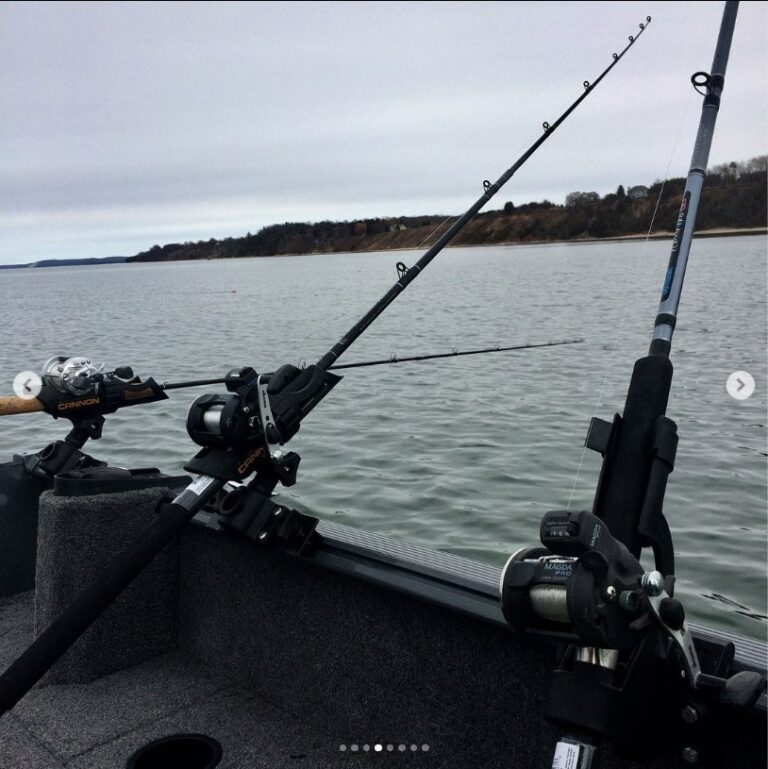
- Back-trolling plugs from a boat: a standout Kalamazoo boat tactic is back-trolling diving plugs to cover migration lanes and trigger reaction strikes from fish in the deeper runs. Boat anglers here tend to keep floating and make another controlled pass rather than anchoring.
Best Baits For Kalamazoo Steelhead
The most productive baits are spawn sacs, skein chunks, beads, worms, and artificial flies. Eggs and egg imitations dominate while the salmon are in and spawning; after the salmon die off, worms, baitfish patterns, and streamers come into their own. For more options, see my guide to the best baits for steelhead.
Regulations And License
You need a valid Michigan fishing license to fish the Kalamazoo. The river is managed under Michigan’s Lake Michigan tributary rules, and the water below the Allegan (Calkins) Dam is the section that holds the steelhead and salmon. Seasons, gear rules, and limits can change and vary by stretch, so always confirm the current regulations with the Michigan DNR before you fish. You can also check the weekly Michigan DNR fishing reports for what is happening on the river.
Kalamazoo Steelhead FAQ
Where is the best steelhead fishing on the Kalamazoo River?
The 4 to 5 miles below the Allegan Dam is the prime water – it is the upstream limit for steelhead and salmon, it concentrates fish, and it stays ice-free for dependable winter fishing. The M-89 access, the Rabbit River junction, New Richmond, and the lower river toward Saugatuck are all productive too, especially on fresh runs close to Lake Michigan.
When is the best time to fish steelhead on the Kalamazoo?
Most steelhead are in the river from October into late April. Late October through early December is prime in the fall, winter fish hold near the Allegan Dam, and March into early May is the best of the spring run. Salmon run from late August through October, with steelhead feeding behind them on eggs.
Is the Kalamazoo River good for wading?
Only in spots. It wades best above M-89 and on the inside of bends, because the outside bends drop to ten feet deep right off the bank. Much of the river is better fished from a boat or from open bank areas, and a long-handled net helps you land big fish along the deep, wooded banks.
What is the biggest mistake anglers make on the Kalamazoo?
Over-fishing the deepest water. When steelhead are moving, they travel through current seams, tailouts, inside bends, and the bucket water below riffles – not the deep holes, which only really produce on the coldest winter days. Fish the travel lanes and cover water, and fish the dropping water after a rain.
Local Guides And Resources
If you want to shorten the learning curve on a big, tricky river like this, a local guide or tackle shop is worth it. A few good options:
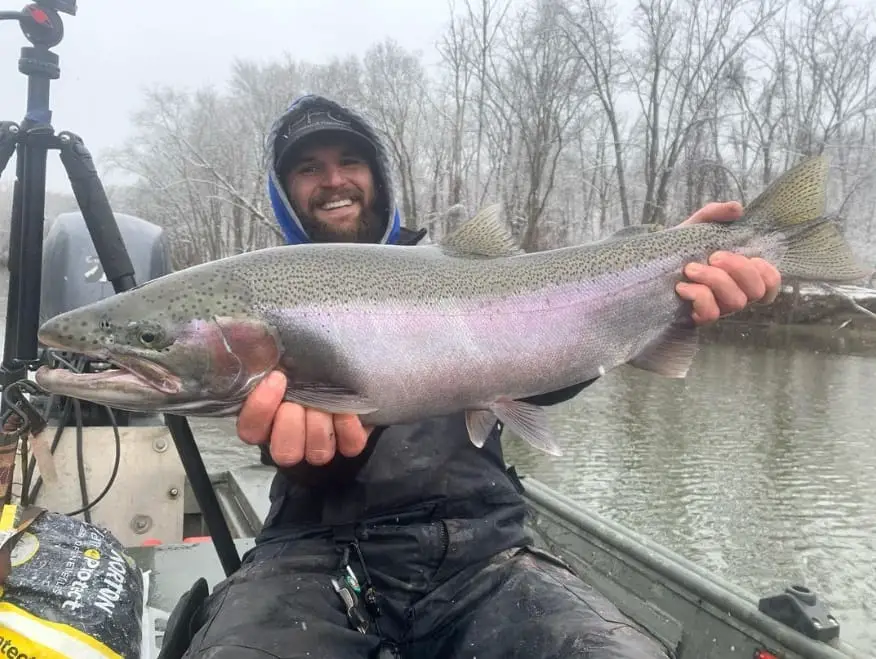
- Get Bent Guide Service – John Wielinga guides the Kalamazoo area and is a good first call for a river guide (pictured above).
- Tie One On Charters (South Haven) – specializes in steelhead on the Kalamazoo and St. Joseph rivers.
- Mainstream Tackle & Outdoors (Kalamazoo/Galesburg) – local tackle and river info.
- D&R Sports Center (Kalamazoo) – a long-standing local hunting and fishing shop.
You can also find weekly Michigan fishing reports from DNR fisheries staff online for a read on current conditions. If you are new or feel intimidated by such a big river, start on the tributaries or book a day with a guide – it will shorten the learning curve a lot.
Tight Lines,
Graham