Best Fly Lines For Trout: Guide Recommended
As a fishing guide for 26 years and the owner of a fishing tackle store, I’ve had the opportunity to test out hundreds of fly lines for trout.
Not only did I get to use and see how fly lines on my clients’ rods performed, but each year I would order in every new fly line from the top brands and then test them to see which ones I would sell in my store, and which ones I’d use when guiding.
I’ve tested and used fly lines from Rio, Scientific Anglers, Cortland, Airflo, Orvis, and a few lesser-known brands.
During this time, I’ve seen some really great lines and some really bad lines that caused all kinds of problems when fishing.
When looking for a fly line, quality matters more than price.
Some lines work well in some conditions or for some fishing methods, while others suck. Hey, I’m just being honest. One thing I hate is not being able to catch the maximum amount of fish, because of bad equipment, and your fly line can either help you or hinder you.
In this article, I’ll tell you my 9 favorite trout fly lines and why they are the best, plus I’ll tell you the:
- Best fly line for dry fly fishing
- Best fly line for nymphing
- Best fly line for Euro nymphing
- Best fly line for Streamer fishing
- Best All-purpose fly line
- Best sinking fly line
- Best budget-friendly fly line
This page covers fly lines specifically – weight-forward, double-taper, and specialty tapers for fly fishing. If you use a spinning or conventional rod and need monofilament, fluorocarbon, or braid recommendations, see my guide to the best fishing line for trout.
NOTE: If you are not sure what line is best for you, which line taper is best, or how to choose the right line for your preferred style of fishing, below my last fly line recommendation, I’ll tell you all the things you should consider when buying a fly line.
Best All-Purpose Fly Line For Trout
I’ll be honest, I like all-purpose fly lines and probably use them more than specialty lines.
I’ve caught thousands of fish on these types of lines, used just about every method, and have caught trout, steelhead, salmon, and many other game fish species, including carp, muck, and pike.
I think they are great if you are a guy who fishes a lot of different methods, or a lot of species with the same rod or the same reel.
The Cortland 444 Classic Peach Fly Line has been one of the best all-purpose lines for as long as I can remember. I think the first time I used this line was over 35 years ago, and I still use it.
Another option which I also use is the Orvis Clearwater Fly Line – See It HERE
Best Dry Fly Lines
Dry fly fishing requires accurate, delicate presentations, and not all lines are good at this. The last thing you want is a clunky fly line that splashes down and spooks fish.
This is the best line for dry fly anglers who want to cast medium to tiny flies with accuracy while still having a soft landing on the water.
Why? Becuase that is how the experts designed it.
It also floats high and has a slick coating for easier casting.
Will it work for other methods too? Yes, you can cast streamers with it and nymphs as well as indicator fish with it, but it was specially designed for the guys who mostly fish dry flies.
You can see all the details and pricing by clicking the orange button.
If price is an issue, consider these two cheaper lines.
- Scientific Anglers Frequency Trout Fly Line – See it HERE
- RIO Mainstream Series Trout Fly Line
Best Fly Line For Nymphing
Nymphing is my specialty and what I am known for. My advanced nymphing classes were always full, and in them, I taught 7 different methods of fishing.
One thing I will tell you is that you can use just about any standard fly line for nymph and do pretty good.
However, when nymphing bigger nymphs, heavier weights, and/or indicators, lines made specifically for nymphing can help, and the Rio Indicator line is my favorite.
These are two other great options that I use and highly recommend.
- Scientific Anglers Amplitude Smooth Anadro/Nymph Fly Line – See It HERE
- Scientific Anglers Amplitude Anadro/Nymph Fly Line – See It HERE
Best Euro Nymphing Fly Line
I’ve been guiding and teaching Euro nymphing since around 2006, which is before 90% of fly anglers even heard of it. During that time, I’ve learned a thing or two about the types of fly lines that work best.
There are some major advantages to using a Euro Line, such as less sag and less line pull. Meaning better leader control and a better presentation.
But, to be honest, nearly all my euro nymphing fly rods use a regular fly line, which allows me to switch to another method and cast if needed.
But remember, I use extra-long leaders that help me avoid the problems of regular lines. To see more about those problems, as well as my leader setups, check out my article: The Euro Nymphing Complete Guide: Tips and Tricks of Experts.
Best Budget Fly Line For Trout
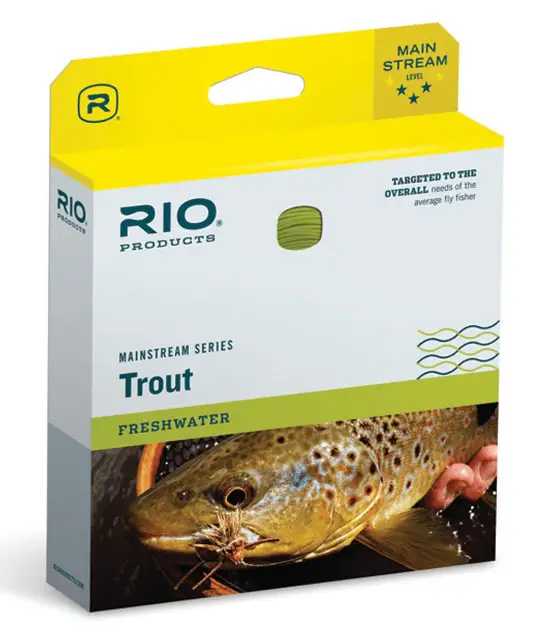
If you are looking for a budget-friendly fly line for trout, then consider the RIO Mainstream Series Trout Fly Line.
I have this on many of my rods that I use for guiding.
It is developed for the new to intermediate level angler looking for an easy casting line that will do everything they need it to do.
Check out the full details by clicking the button below.
Another great option is the Cortland 333 Classic Trout All Purpose Fly Line – See It HERE
Best Streamer Fishing Fly Line
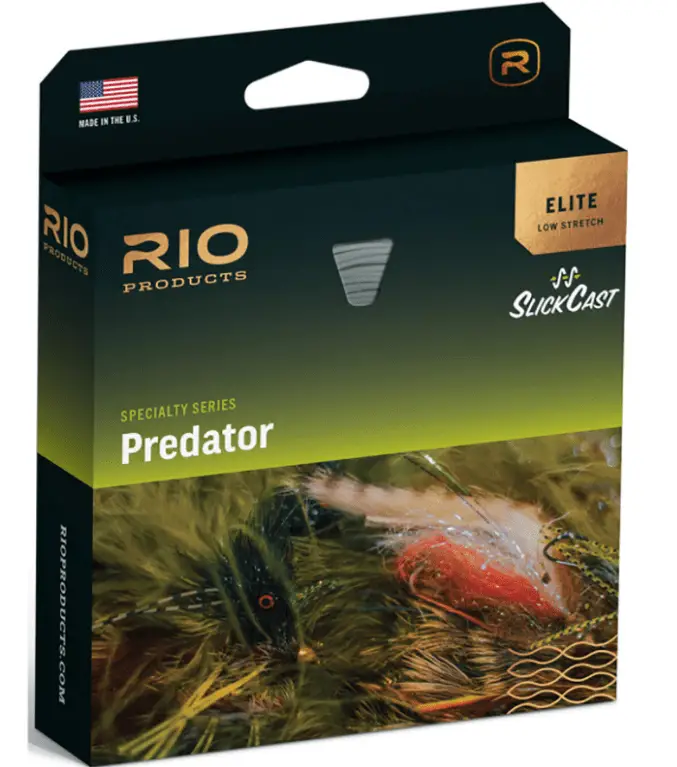
When it comes to all methods used for fishing trout, streamer fishing is one method that can really be improved with a specialty line.
I know this because I love streamer fishing and I’ve taught thousands of anglers how to do it. And, one of the most difficult things I’ve found is teaching anglers how to properly and safely cast big streamers.
Yes, I use big streamers when I fish for trout. Which I discuss in my article: 13 Best Streamers For Trout Used By Top Guides
Now, one of my favorite fly lines for streamer fishing is the RIO Specialty Series Elite Predator Fly Line. But be careful which one you buy.
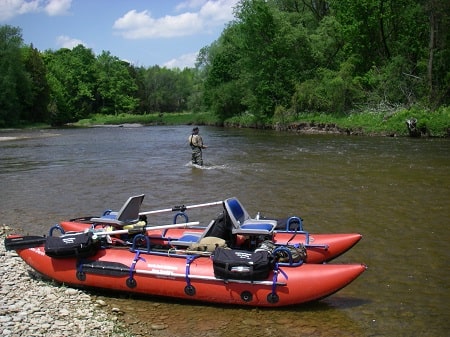
In narrow rivers, with plenty of smaller pockets, I prefer using a heavily weighted streamer with a full floating line.
In bigger, more open rivers, I will use one of the medium or fast sink tip lines with non-weighted streamers. This line gives you those options, so choose the one that best suits you.
Factors To Consider When Selecting A Fly Line For Trout
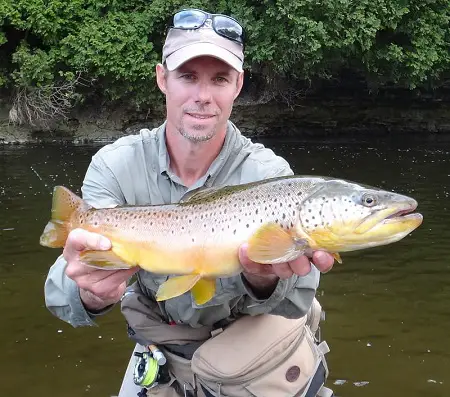
For any activity, but especially fly fishing, having the proper equipment is crucial. As a beginner, fishing equipment can be tough to understand and use.
Here you will find a detailed reference to the equipment necessary for a beginner’s foray into the sport of fly fishing.
After deciding on the proper rod weight and reel, the next thing you’ll need is a fly line. This piece was written to assist you in selecting the most suitable fly line for your needs. Understanding which fly line weight is ideal for each fishing condition is important.
We’ve got you covered on the fundamentals of trout fishing, such as how to select the finest fly line for trout, as you get ready for a fantastic day on the water. This is a crucial component for successful fly fishing, so don’t scrimp.
For presenting flies to trout, the line you use makes all the difference in the world. The difference between getting a bite and being ignored could be as simple as choosing the perfect opening line.
Here are some things to think about while you shop for the best fly line for trout.
- Rod and reel specifications – When fly fishing for trout, match the weight of the rod to that of the line for optimal line to use. In some cases, guides and anglers will go one size up to load the rod better, for example is using a 6-weight line on a 5-weight rod; however, it’s rarely good to go down one size, for example, using a 4-weight line on a 5-weight rod, otherwise, your casting will suffer.
- Size matters… Comparing the fly line to that of a fish – Example, use a smaller line for smaller trout, and a bigger or heavier line for salmon, musky, or other large fish, just make sure the line and the rod still match.
- Larger flies often require heavier rods and heavier lines to cast. Keep that in mind.
- Whether you should use a floating or sinking line depends on the type of presentation you need to use. – Many anglers believe that a floating line is the most effective fly line for fishing for trout, and for almost all methods, I agree. 90% of my lines are full-floating lines. I only use sinking lines for lake fishing or streamer fishing.
- Are you utilizing a long-range cast for your performance needs? Heavier fly rods and fly lines will cast further. So, even though you could catch trout on a 3-weight rod, if you need to cast 90 feet out, a 5 or 6-weight may be required.
- Fish that are easily frightened require a method that is more subtle. The fly line taper is crucial at this point; a big, clunky streamer line will land with a splash and scare the fish you are trying to dry fly fish for.
If you put in the time and effort to plan ahead, additional features such as line color, length, and even temperature can make a significant difference in the quality of your fishing experience and the amount of fish you catch.
When it comes to fishing, not every fly line or fly line weight is created equal. There are four primary varieties of fly line, each designed for a different technique.
Floating Lines For Trout
There’s a good reason why floatable fly line is so popular. Not only can you fish with dry flies with it, but it’s versatile enough that you can throw just about anything else. Streamers or nymphs, it makes no difference.
While it may not be ideal for fishing deep lakes, it can be used in virtually every other setting. It’s for this reason that most fishermen myself included, mostly use a reel with floating fishing line.
To present dry flies without having your insect pulled beneath the water, use a floating line, which is lighter and floats on the water’s surface. In addition, a caster can quickly pick up a line that is floating to make repairs or cast again.
Floating lines also mend well, sinking lines do not. So any method, like nymphing, where mending is required, always use a floating line.
Sinking Lines For Trout
A sinking line is commonly used when fishing in certain conditions and bodies of water, but some anglers often get it wrong.
Sink tip lines and full sink lines are the two main types of sinking fly lines. A sink tip line consists of a lighter or floating section in the middle and 5-25 feet of sinking line at the front end.
Full sinking lines mean the entire line will sink. I usually use sink tip lines for river fishing and will consider full sink lines for lake fishing, especially if I need to get really deep.
Sinking lines come in different sink rates, so watch for that. You will need to choose which sink rate is best for you.
Line sinks at a pace proportional to its density rather than its weight.
Sometimes anglers think nymphing is best done with a sinking line because the nymph needs to sink and go deep. This is ONLY true in lakes, not in rivers. Do not nymph fish rivers with a sinking line; there are far, far, far more effective nymphing methods, and they all use floating lines. See them in my article Nymphing: An Experts Introduction To Nymph Fishing
Weight Forward Fly Lines
Lines with a weight-forward taper are another typical type, and the one I recommend the most, and use the most. Normally, the first twenty to thirty feet of a weight-forward line are thicker and heavier, which improves casting and line management, like mending.
And the subsequent length of the line is thinner and lighter. Weight-forward lines are superior to a double fly line taper in casting distance and work well in many popular trout waters.
Accuracy issues are slightly problematic with weight-forward lines, but not by much.
Double Taper Fly Lines
Lines with a double taper have equal tapers at both ends and a somewhat long body in the middle.
Short and medium casts, roll casting, as well as euro-nymphing, benefit from the use of this line.
In addition, double taper lines can be used either way around, making it easy to switch out the worn end.
Double taper lines make precise fly placement slightly easier. However, I do not recommend them for beginners or anyone looking for a line for multiple methods.
Best Weight Forward Fly Line For Trout
Scientific Anglers Amplitude Trout Taper: The Amplitude is the longest-lasting and most accurate line on the market since it is the first series of lines to use the groundbreaking AST PLUS slickness additive. This is smoothness perfected.
Over eight times as long as competing lines, the Amplitude Trout is an excellent investment. It is designed for precision presentations for people who adore dry flies.
Best Double Taper Fly Line For Trout
Premier RIO Technical Trout Fly Line- There’s a good reason why RIO is such a common brand among trout fishermen. For a long time, their fly fishing lines were widely considered to be among the very best available to anglers. And in spite of increased competition, many anglers continue to prefer RIO fly lines.
The Technical Trout – Double Taper is the best freshwater fly line if you enjoy switching between different fly line styles and fishing techniques on the fly.
A tight-lined hookset is guaranteed because of the fly line’s evident lack of stretch, which also provides the angler with more force.
Best Sinking Fly Line
Scientific Anglers Sonar Titan Int / Sink 3 / Sink 5 Fly Line: In order to create one of the most cutting-edge full triple-density sinking fly lines, SA bathed one of its most popular fly line tapers, the Titan, in several combinations of tungsten powdered. This fly line is exactly what you need to take your streamer fishing to the next level. This line has no intermediate sink tip, so it sinks directly down to your streamer but casts like a floater.
Throwing and dodging are things of the past. You have entered the age of triple density.
Tight lines,
Graham